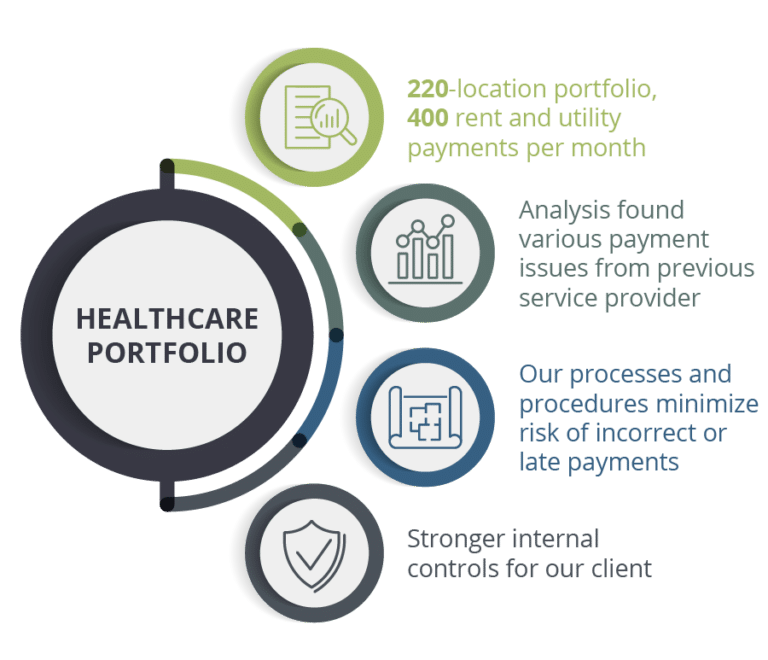
In 2020, Scribcor was awarded a contract to provide full-service lease administration duties to a healthcare company, assuming these duties from another service provider. The scope of work included the processing and payment of rent and utility invoices for their 220-location portfolio, resulting in approximately 400 payments per month.
During the onboarding phase of Scribcor’s engagement, our team conducted an analysis of the client’s existing operating environment. Part of the onboarding process included conversations with the prior service provider, as well as requests for historical information and other documentation. This would allow Scribcor to transfer the account processing and to understand outstanding account balances, if any.
The first sign that something was amiss was in the communications and transfer of information from the prior service provider. Information was sent piecemeal, was not organized or complete, and was not sent timely.
As the Scribcor team worked to transition individual rent and utility accounts, they noted many past due account balances. The team also received disconnect notices, indicating that some accounts were in arrears for quite some time. Reviews of the bank statements also uncovered transfers of funds between the client’s and service provider’s bank accounts. The transfers could not be explained or substantiated by the documents Scribcor received.
The client unknowingly paid late fees for several utility accounts, a direct result of the prior service provider’s processing times. Per the previous contract, the service provider was responsible for these fees and not the client.